Image

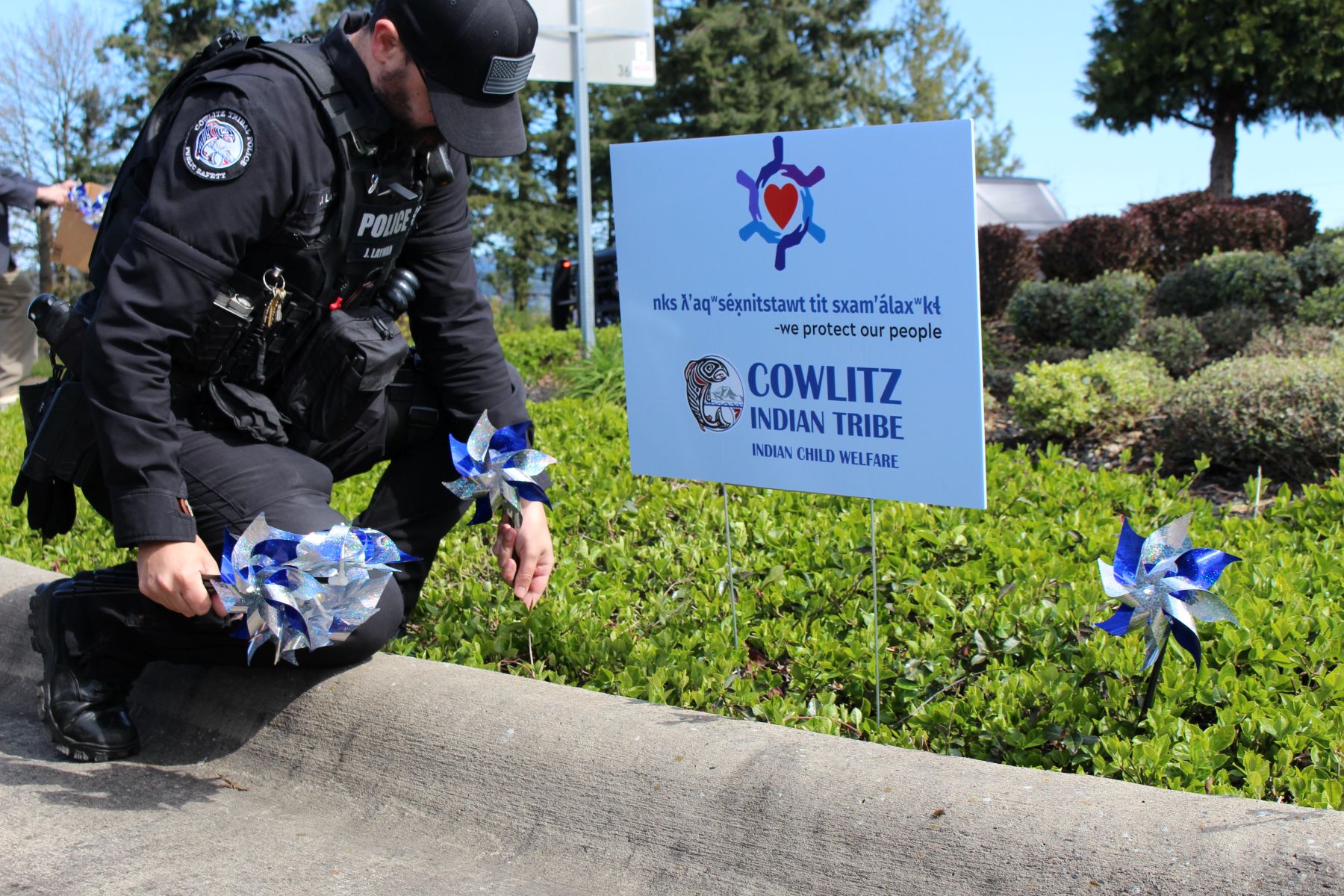
April is Sexual Assault Awareness Month and Child Abuse Prevention Month. Across the Cowlitz Indian Tribe, we recognize the importance of this time for Cowlitz Tribal members and the community we serve. Throughout April, the Tribe's Health and Human Services Department has placed blue pinwheels throughout our Ridgefield reservation and Tribal campuses as a reminder of prevention, protection and our children's safety. Cowlitz Tribal Public Safety is carrying this message forward, displaying nks ƛʼaqʷséx̣nitstawt tit sxamʼálaxʷkɬ — "We protect our people" — in the Cowlitz Coast Salish language on police vehicles as a commitment to that responsibility. Indian Child Welfare (ICW) has also been active this month, providing the awareness graphics shared with Cowlitz Tribal Public Safety and hosting a webinar on the Indian Child Welfare Act to provide understanding of how federal protections connect to the work ICW does every day.
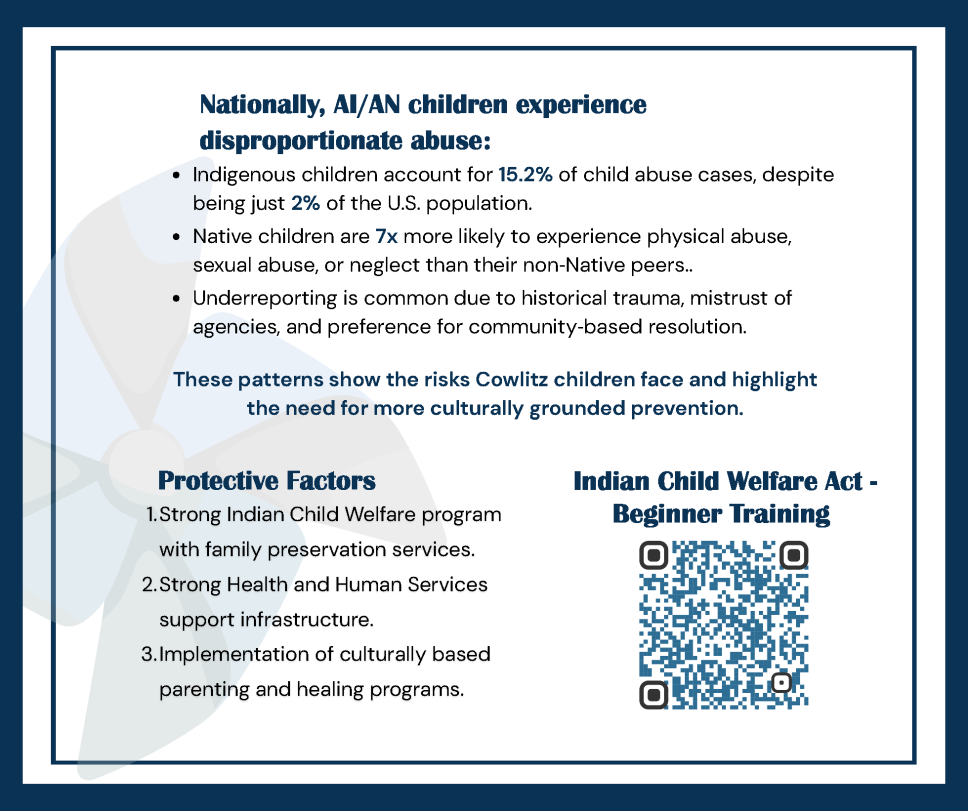
According to the National Sexual Violence Resource Center, more than 4 in 5 American Indian and Alaska Native women have experienced violence in their lifetime. Closer to home, more than half of AI/AN women — 56.1% — have experienced sexual violence, and 96% of those victims were harmed by non-Native perpetrators. In Washington state alone, 470 Native children were removed from their homes in 2025 — one of the highest rates among any demographic group — and unlike other groups, that rate has not declined despite statewide reform efforts. The numbers make clear why the Tribe’s work matters.
“Preventing sexual assault and child abuse in Indigenous communities starts with returning to the teachings that have always guided us: respect, relational accountability, and caring for those who need protection the most,” said Debbie Hassler Deputy Director of the Cowlitz Indian Tribe Health and Human Services Department. “These values shape how we show up for one another—seeking clear consent, honoring boundaries, and treating every person, especially our children, with dignity and care.”
The Indian Child Protection and Family Violence Prevention Act, enacted in 1990, was built on this same foundation, establishing requirements for reporting and investigating child abuse on Tribal lands and funding prevention programs for Tribes. Laws like this matter, and so does the work the Cowlitz Indian Tribe's Health and Human Services Department does every day within our community.
“Everyone has a role in creating safer environments. Learning the signs of abuse, checking in on others, and speaking up when something feels wrong are small but powerful actions that build a culture of accountability,” said Hassler. “Supporting people with compassion and confidentiality helps break cycles of silence. When individuals are believed, uplifted, and supported, our whole community rises with them.”
This April marks the 25th anniversary of Sexual Assault Awareness Month nationally — a milestone that reflects both the progress made and the work still ahead. The Cowlitz Indian Tribe is proud to be part of that.
Learn More: