Image

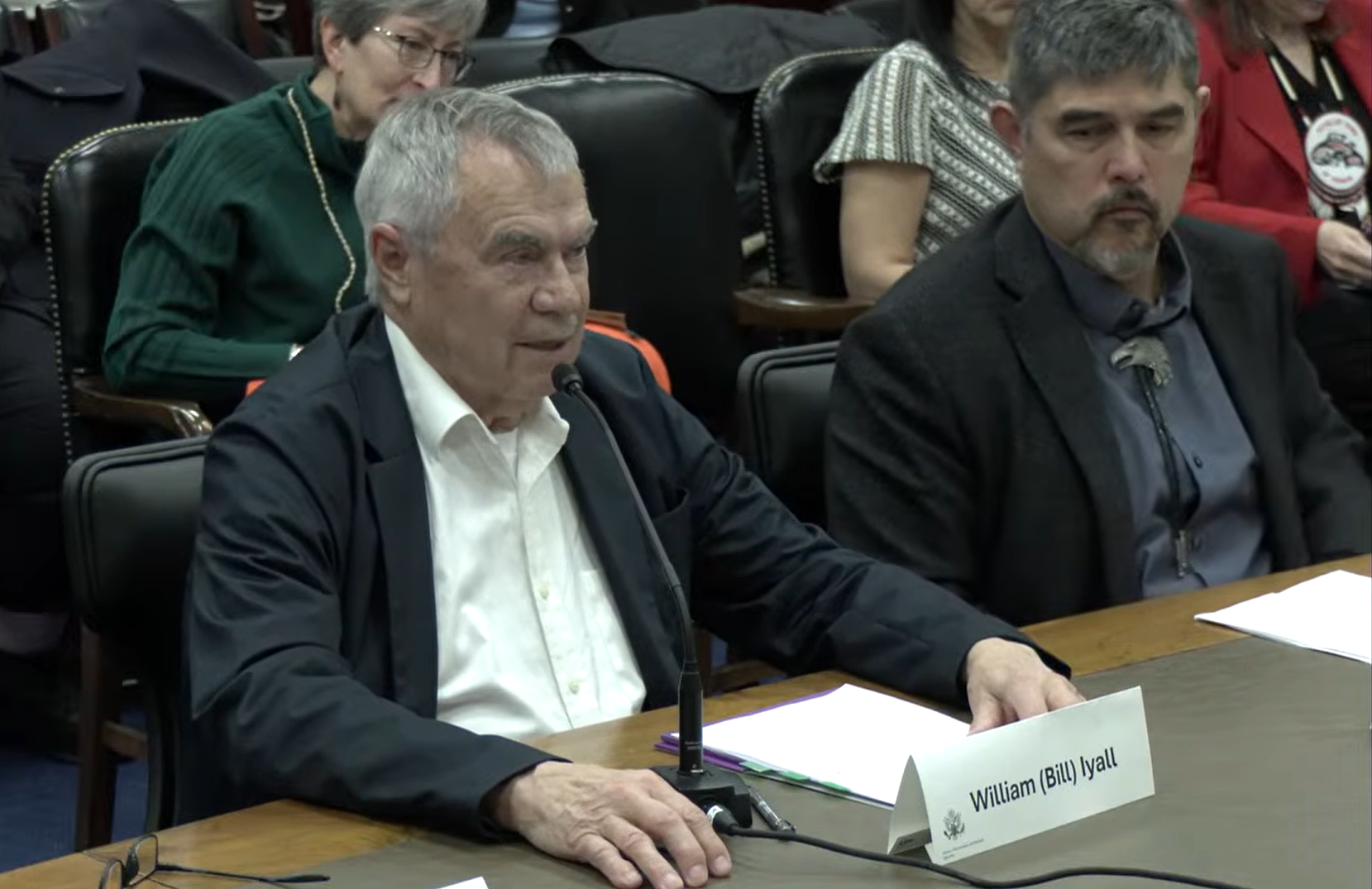
On March 18, 2026, Cowlitz Indian Tribe Chairman Bill Iyall traveled to Washington, D.C. to testify before the House Committee on Appropriations, joining Tribal leaders from across the country in making the case for adequate federal funding for Native communities. The Cowlitz Indian Tribe is entering a new phase of growth, with its land base expanding from 156 to 300 acres. However, that momentum is limited by underfunded infrastructure and essential services.
"We are in the process of nation building. We have our economic development base, but now we need Tribal governance, public safety, and other facilities," said Chairman Iyall.
Chairman Iyall focused his testimony around four interconnected areas where federal investment falls short of the Tribe's needs and obligations: health care, access to roads and water, and public safety.
The Cowlitz Indian Tribe participates in the Indian Health Service Tribal Self-Governance Program (IHS TSGP), operating four clinics that are in Vancouver, Longview, DuPont, and Tukwila. The clinics span roughly 100 miles of the Interstate 5 (I-5 corridor), allowing the Tribe to provide primary care, mental health services, and drug treatment to thousands of Native and non-Native patients alike. Yet Chairman Iyall noted that a single federal employee handles all 638 contract health service agreements for the entire nation — a critical bottleneck. He urged the Subcommittee to significantly increase IHS funding, establish mandatory funding for contract health support, and maintain advance appropriations to ensure continuity of care.
Chairman Iyall also spoke on the unique opportunities and challenges of having the Cowlitz reservation divided by I-5. Chairman Iyall specifically noted how the northwest portion of the reservation has no safe alternate route — a dangerous gap when congestion blocks emergency vehicles. Bureau of Indian Affairs (BIA) Roads funding, Chairman Iyall noted, has been underfunded for decades across Indian Country. On water, the Tribe's wastewater treatment facility is already at full capacity — a hard ceiling on any future economic development. Additional funding through IHS and Environmental Protection Agency (EPA) programs would both protect water quality and unlock growth.
The Tribe's current 19-officer police force covers not only the reservation but neighboring communities where they are often first responders. Chairman Iyall noted that despite growing call volumes every year, the department operates out of two modular trailers alongside the Tribal court — with no dedicated evidence storage, no detention processing area, no holding cells, and aging patrol vehicles. Chairman Iyall asked the Subcommittee to significantly increase Bureau of Indian Affairs (BIA) Public Safety and Justice appropriations to address these basic operational deficiencies and protect both Tribal members and the broader community the Tribe serves.
Chairman Iyall's testimony echoed the voices of Tribal leaders from across the country who testified over the two-day hearing — a reminder that the federal trust responsibility to Native peoples requires not just acknowledgment, but adequate and consistent appropriations.